

Garage Door Panel and Track Repair in Hialeah
How a door ends up dented, crooked or off its track, and what it takes to put it right.
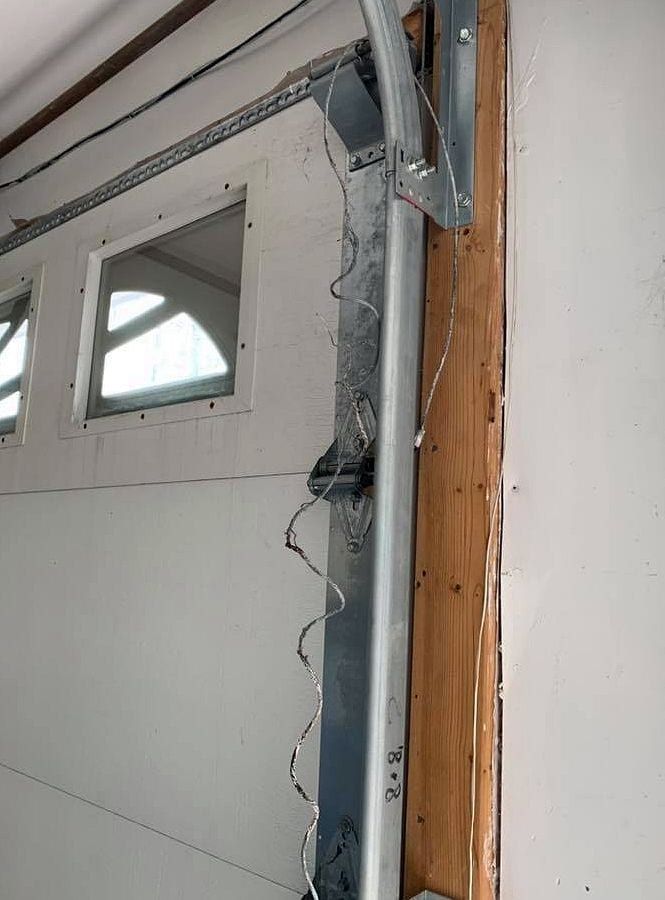
A garage door rides on rollers in two steel tracks, one on each side, and bends at hinges between its panels as it turns the corner overhead. When a roller wears flat, a track gets knocked out of line or a cable lets go on one side, the door twists in its opening and one side runs ahead of the other. Push it further and the rollers pop out of the track, leaving a door hanging crooked and dangerous to touch.
How a Door Goes Off Track
It rarely happens out of nowhere. The usual story is a roller that has been grinding for months, a track bracket that worked loose, or a door that was bumped by a car and kept running anyway. A broken lift cable on one side does it quickly, because that side drops while the other side holds.
| Damage | Common cause | Repair or replace |
|---|---|---|
| Dented bottom panel | Bumped by a car or a bin | Replace the panel if it still matches; else the door |
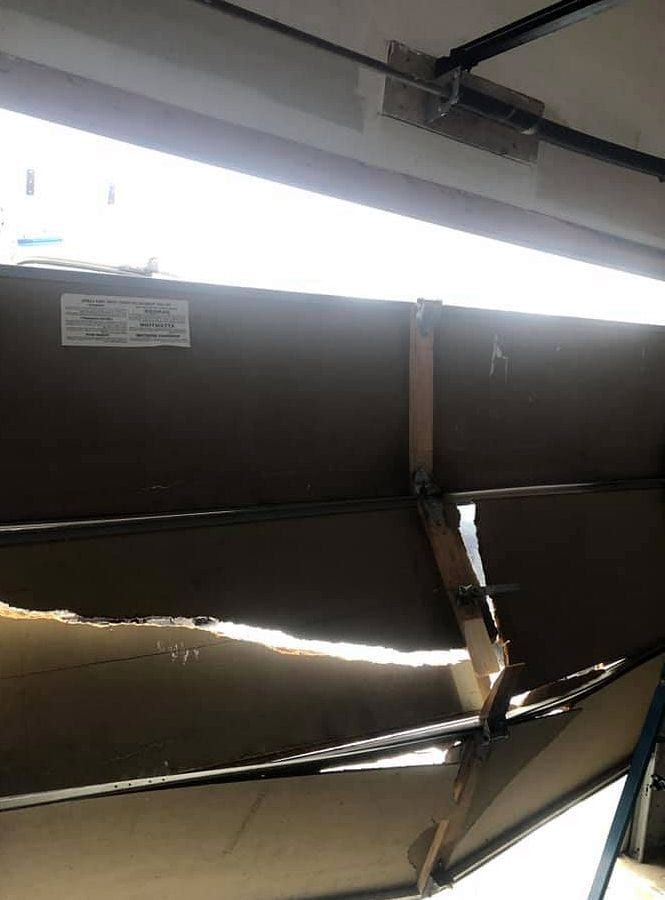
| Cracked or split panel | Impact, or a door forced while stuck | Replace the panel |
| Bent vertical track | A car mirror, a ladder, a hard hit | Straighten a small bend; replace a kinked track |
| Door off the track | Worn rollers, a loose track, a broken cable | Re-seat the door, then replace what let it slip |
| Track pulled from the wall | Loose or rusted anchors in the block | Re-anchor the brackets |
| Several rusted-through panels | Years of humid air and standing water | Replace the door |
Hardware That Wears
| Part | Sign of wear | Effect on the door |
|---|---|---|
| Rollers | Wobble, flat spots, a grinding sound | The door shakes and can jump the track |
| Hinges | Cracks, loose screws, sagging sections | Sections rub and the door binds |
| Track brackets | Rust, loose bolts, a gap at the wall | The track moves out of line |
| Bottom seal | Torn or flattened rubber | Rain and leaves get in |
| Struts | A bowed brace across a section | The panel flexes when the door lifts |
Panels can buckle from the inside too. When a door keeps running against an obstruction, or the opener pulls a door with a broken spring, the sections fold at their weakest joint.
Rust, Swelling and Block Walls
Hialeah’s humid air and heavy summer rain are hard on the parts closest to the floor. Water that sits along the bottom of the opening rusts the lower track ends and the bottom brackets first, and wood or wood-core panels swell until the sections rub. Keeping the bottom seal in good shape and the tracks dry does a lot to slow it down.
Most garages here are concrete block. The track brackets are anchored into the block, and over time an anchor in a hollow cell or a rusted fastener can loosen. A track that moves when you press on it by hand needs its brackets re-anchored before the door is run again.
Before the Visit
- Do not force the door up or down.
- Clear the path under the door and keep cars out of the way.
- Note which side is bent or off the track.
- Email a photo of the track to office@lakebellegategarage.com.
Panel Questions
Can one damaged panel be replaced instead of the whole door?
Often, yes. Most sectional doors are built panel by panel, so a single dented or cracked section can be swapped. The catch is the match: the new panel has to be the same make, profile and color, and an older or discontinued door may not have one available.
A replacement panel on a wind-rated door also has to keep the door’s rating, so it needs to come from the same approved product line.
Book Panel and Track Repair
Pick Panels, Tracks or Rollers on the form and tell us which side of the door is the problem.